21 November 2019

FT: Tom Morton-Smith on dramatising the ‘chess match of the century’

The Financial Times periodically covers chess topics in a thoughtful way and just put out an article on a new theatre production in London, entitled Ravens: Spassky vs Fischer, that centers on the 1972 Fischer-Spassky world championship match. All of the actual games are reportedly included in some fashion, so it sounds like a more serious effort than many pop culture depictions of chess.

Link to the FT article

20 November 2019

Chess imagery in popular culture

From Captain America: Civil War
In a short detour from the usual topics, I'd like to take a moment to explore (and deplore) the often annoying and occasionally truly awful depictions of chess in pop culture - including movies, TV productions, advertisements, and the like. Chess has an intellectual and often-times sophisticated image associated with it, although of course this is not always the case in real life. It's when things just appear wrong that it becomes annoying (or sometimes funny) to any chessplayer with a true love of the game.

The most frequent error - based on a lifetime amount of (unscientific) observation - is setting up the board wrong. It seems that the vast majority of the time I've seen a chess board on screen, it's not correct - something which should take a production assistant maybe a few seconds to verify, especially in the smartphone era. The two most common problems are the initial position of the pieces - often the King and Queen are switched - or when the board is turned 90 degrees, with colors reversed (the lower right square being dark rather than light).

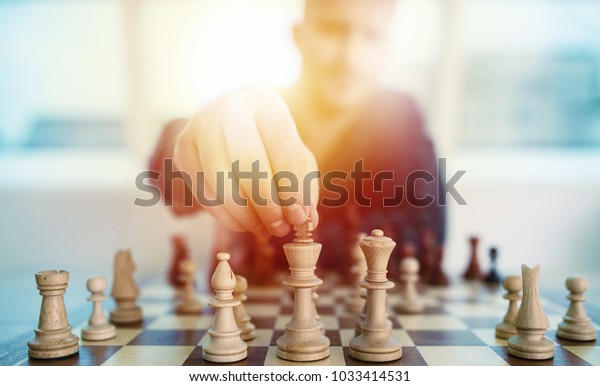
Here's one of the top Shutterstock chess images, which demonstrates the first sin, reversing the king and queen:


An example of the latter sin, wrong board orientation/colors, can be seen in the lead pic of this post, taken from the blockbuster-budgeted Captain America: Civil War. At least the wood board and set are very aesthetic-looking and high end, with the pieces set up in correct order. It's a relatively subtle error, but I suppose it still doesn't bode well for Black Widow (Scarlett Johansson) and her allies that they can't set up their chessboard right.

Another cringeworthy (and more blatant) example of this is in the TED-Ed "A brief history of chess" video, which is intended to educate its audience about chess:


It's also relatively common to see random positions that could never happen in a real game, are illegal, or impossible things like multiple same-color bishops or pawns on your first rank. Those of us who recognize these gaffes may inadvertently laugh out loud, causing our non-chessplaying companions to wonder what is going on. This can be slightly embarrassing in, say, a business meeting, but it's really not our fault, is it?

Business presentations are in fact an egregiously common example of chess-related blunders. I suppose consultants and others want to make dramatic and smart-looking statements, but they often just look silly. For example:
Like knocking over your opponent's king with your rook?
The above at least might show a real position, although it's not entirely clear from the visual. The below is worse, as the source article (from a chess-related domain, in fact) is about chess and business analysis, but it illustrates the idea with a randomly thrown-together board. This doesn't exactly convey an image of competence and deep understanding:
From https://www.ichess.net/blog/chess-and-business-analysis/

Some relief from the awfulness


To provide at least some contrast, my favorite chess depiction (if not completely accurate), far and away, is the opening scene in the Bond movie From Russia With Love (1963). It shows a slightly modified position from Spassky-Bronstein, 1960. (You can tell it's from the 1960s by the ticking chess clocks and the fact you can smoke at the board.)


The Chess.com article on it is very thorough and one of the comments points out that the extended analysis based on the movie's game position has a flaw. Oh well.

Two other movies that get the feeling and most (if not all) of the details right:
  • The Luzhin Defense (2000), based on the Vladimir Nabokov novel. There is one major game inaccuracy depicted, according to the linked article, although the finale's combination sequence is correct.

  • 2001: A Space Odyssey (Dave plays White; based on the position shown, he is not really very good, and of course loses to Hal 9000.)

19 November 2019

Annotated Game #229: Maneuvering in a (White) Hedgehog

This final-round tournament game was a little wobbly, but I managed to pull myself together after the downward trend in the previous two games and hold the draw in the endgame. I wasn't in the mood for an active, attacking game and the opening (an English) was a little quieter than normal. I end up in a Hedgehog formation, with pawns on the third rank and a slightly cramped and passive position, but one that is difficult to break. This sort of game requires plans based on piece maneuvering and it is instructive to see how my choices almost got me in serious trouble, as my opponent did a better job of following the needs of the position. However, he eventually lets me off the hook on the d-file with some exchanges and the endgame is fully equal after that. I was fine with this and happy to complete the tournament. My final performance was a little below the 1800 mark, but this wasn't enough to drag my rating down below Class A, which meant that I had passed (barely) my first test of holding onto my new Class level.

[Event "?"] [Site "?"] [Date "????.??.??"] [Round "?"] [White "ChessAdmin"] [Black "Class B"] [Result "1/2-1/2"] [ECO "A13"] [Annotator "ChessAdmin/Komodo 11.2"] [PlyCount "77"] {A13: English Opening: 1...e6} 1. c4 e6 2. Nf3 d5 3. b3 Nf6 4. Bb2 Be7 5. e3 O-O 6. Be2 b6 7. O-O Bb7 8. d3 (8. cxd5 $5 {here or earlier is a different way to play, reducing the central tension.}) 8... c5 9. Nbd2 {with this formation, White plays more of a waiting game in the center, while the Nd2 is flexible.} Nc6 10. cxd5 (10. a3 {is by far the most often played in the database. This takes the b4 square away from the knight and continues the waiting game.}) (10. Ne5 $5 {is an interesting idea, welcoming an exchange of Black's well-placed Nc6.}) 10... Nxd5 11. a3 {White now has a Hedgehog formation, which is often what is aimed for with the d3/Nbd2 and Bb2 development. Black has more space, but the Hedgehog is hard to crack.} Bf6 12. Qc2 {giving White a tempo to get his queen off the first rank, thereby connecting the rooks, and to occupy the long diagonal if Black exchanges on b2.} Bxb2 13. Qxb2 Qf6 14. Qxf6 { essentially forced} Nxf6 {the position now looks rather drawish, but it is important not to become complacent. White's rooks need to get into the action now.} 15. Nc4 $146 (15. Rfc1 {is most played here. For example} Rfd8 16. Nc4 Kf8 17. Nfe5 Nxe5 18. Nxe5 Nd7 19. Nxd7+ Rxd7 20. b4 cxb4 21. axb4 Rc8 22. Re1 Bd5 23. d4 Rc2 24. Bd3 {1/2-1/2 (24) Kaenel,H (2452)-Gurieli,N (2373) Bern 2000 }) 15... Rfd8 16. Rfd1 Rac8 17. Rac1 Nd5 {Black does not have much more that he can do at this point. Here, however, I start some ill-advised maneuvers.} 18. Ncd2 {one of the problems with this is that it interferes with the protection of the d-pawn by the Rd1, as Black immediately notes.} (18. Nfe5 { is a much more active choice, reducing Black's piece presence in the center and therefore threats.} Nxe5 19. Nxe5 $11) 18... Ba6 19. Ne4 {I've spent two moves putting the knight here, where it is not any better posted than on c4 and is probably worse, since from there it helped control e5.} e5 (19... f5 20. Nc3 Nxc3 21. Rxc3 e5 $15 {is an improved version of the idea for Black.}) 20. Nc3 $6 {now Black gets in the knight exchange without having to play ...f5 first.} (20. g4 {preventing f7-f5} f6 $11) 20... Nxc3 $15 21. Rxc3 {Black is doing a good job of making my position more awkward and under pressure, but as of yet there are still no real threats. His next move increases the pressure, however.} e4 {unfortunately I can't simply take the pawn, due to the hanging Be2.} 22. Ng5 (22. Ne1 {ugly but a good defensive move, reinforcing d3.}) 22... exd3 $11 {this lets me off the hook in the center.} (22... f5 $5 $15 {would keep the tension.}) 23. Bxd3 Bxd3 24. Rcxd3 Rxd3 25. Rxd3 {at this point I was confident I could hold the draw. Black has a slight advantage with the 3-2 queenside majority, but my pieces can restrain it.} Rd8 {this simplifies the task for me.} 26. Rxd8+ Nxd8 {A knight endgame occured, comments Komodo via the Fritz interface. The draw is much more clear now, as long as I activate my king.} 27. Ne4 Ne6 28. a4 {this is unnecessary.} (28. Kf1 {best to just get on with centralizing my king.}) 28... a6 29. Nc3 {this active knight combines well with the a-pawn to restrain Black's b5 advance.} Nc7 30. Kf1 Kf8 31. Ke2 Ke7 32. Kd3 b5 33. Ne4 Ne6 (33... c4+ $6 34. bxc4 bxa4 35. Kc3 $14) 34. f4 (34. f3 {is more solid.}) 34... f5 35. Nc3 Nc7 36. e4 g6 37. e5 {now I felt completely fine with the endgame, as Black can't just concentrate on the queenside, but will have to guard the territory in front of the protected, passed e-pawn.} Ke6 38. g3 Ke7 39. Ke3 {essentially a draw offer, waiting for Black to see that there was no way to make progress.} 1/2-1/2

16 November 2019

Annotated Game #228: Offsides knight, or what was the plan again?

This next game continued the downward tournament trajectory, which had started with a relatively clean game and win in the first round (Annotated Game #225), followed by a shaky win, followed by a shaky draw. The below is a rapid loss in a Classical Caro-Kann, which really shouldn't happen, but is instructive to see. White plays solidly and deviates in the opening, a situation highlighted in "Common opening repertoire pitfalls" - in fact, I had this game in mind as a prime example.

I do well in responding as Black through move 12, finding appropriate development for my pieces that both takes into account and takes advantage of White's play. Once I am faced with finding a plan on move 13, however, instead of the thematic ...c5 break I choose to simply exchange off my opponent's pieces. Mindless exchanging is a common error of Class players and in this case it simply improves my opponent's position while denuding my kingside of defenders. The most egregious fault, however, is placing my knight on b6, where it stays offsides for the remainder of the (short) game. I think that Caro-Kann players need to be very careful about any ...Nb6 ideas, as it can be seductive to think about repositioning it to the more central d5, but White often can either kick it with c2-c4 or just keep it shut off from the action. Props to my opponent for quickly taking advantage of my deviations from what the position demanded.

[Event "?"] [Site "?"] [Date "????.??.??"] [Round "?"] [White "Class B"] [Black "ChessAdmin"] [Result "1-0"] [ECO "B18"] [Annotator "ChessAdmin/Komodo 11.2"] [PlyCount "43"] {[%mdl 8192] B18: Classical Caro-Kann: 4...Bf5 sidelines} 1. e4 c6 2. d4 d5 3. Nd2 dxe4 4. Nxe4 Bf5 5. Ng3 Bg6 6. Nf3 Nf6 {this is a move-order finesse, taking advantage of White's 6. Nf3 instead of the standard h2-h4. Now Black has the option of playing ...Nh5 to block the h-pawn advance and exchange the Ng3.} 7. Bd3 {a solid move that is very common (second choice in the database), just behind the more theoretical h2-h4.} e6 {in positions with a Black pawn on h6 (typically played as a response to h2-h4), it is essentially obligatory to exchange on d3. Here it is not, which is one of the main positional differences. Instead of helping develop White's queen with the exchange, the freeing pawn move is played. Incidentally, almost all of the top-level games in the database feature the text move.} 8. O-O Bd6 {another difference is that the bishop can be developed here rather than e7, preventing White's bishop from going to f4 and getting on the more active h2-b8 diagonal.} 9. Re1 O-O 10. Bxg6 {the most common plan here. The White bishop will get no better and exchanging itself for its counterpart on g6 allows the infliction of a minor weakness on the h-file for Black. This should not be a real problem, but it ends up being a losing one for me, as we shall see.} hxg6 11. Bg5 Qc7 {this takes advantage of the doubled g-pawns, as White exchanging on f6 will no longer inflict positional damage. In fact, it would help Black by controlling e5 with a pawn and allowing for ...Kg7 followed by putting a rook on the h-file.} 12. c4 Nbd7 {developing the last minor piece.} 13. Rc1 (13. c5 Bf4 $11 {poses no issues for Black.}) 13... Bf4 {this is not a bad decision, but the follow-up is poor. It is unnecessary to force the issue of the Bg5 right now, and Black could gain more activity with the thematic ...c5 break.} (13... c5 14. dxc5 Bxc5 $11) 14. Rc2 (14. Bxf4 Qxf4 15. Ne2 Qc7 $11) 14... Nb6 $6 { this actually worsens the position of the knight, which no longer influences e5 and c5 or supports the Nf6.} (14... Bxg5) 15. Ne4 $14 {my opponent finds the best way to take advantage of the offsides knight.} Nxe4 {this worsens the situation by removing all of Black's minor piece defenders on the kingside and helping White's piece activity.} (15... Bxg5 16. Nexg5 Nbd7 $14) 16. Rxe4 Bxg5 17. Nxg5 Rfe8 {not admitting the mistake with the knight, as it would be best to bring it back immediately. The text move has the idea of supporting e6 and giving the king a square on f8, but too much of Black's army is still sidelined.} (17... Nd7 $5 $14) 18. Qf3 $16 Qe7 19. Qe3 {supporting the Ng5 and increasing pressure on the e-file.} Rad8 $2 (19... Nd7 {is necessary to defend. I underestimated the danger to the king, which now immediately manifests itself.}) 20. Rh4 $18 Qf6 $4 {a blunder in a bad position, comments Komodo via the Fritz interface. I saw that the king had no squares and would need an escape route from the h-file threat, but this places the queen on a vulnerable square.} (20... Qc5 {is the engine line, an active defense based on White's back-rank vulnerability. White is still much better, however.} 21. Rc1 Qf5 22. g4 Qa5 23. a3 $18) 21. Qh3 Kf8 22. Nh7+ (22. Nh7+ Ke7 23. Qa3+ Kd7 24. Nxf6+ gxf6 25. Rh7 $18) 1-0

12 November 2019

Annotated Game #227: Lack of an early middlegame plan

This next tournament game is a perfect illustration of a common opening repertoire pitfall, that of not having a good (or any) early middlegame plan coming out of the opening. My opponent adopts a Slav setup as Black, which I should have played more actively against. Specifically, I should have recognized the standard idea of White playing an early Qb3 after Black's light-square bishop is away from the queenside; I've often enough been faced with this on the other side of the board. I hit on this idea later in the game, as well as the e2-e4 push to challenge Black in the center, but the delays mean that Black has fully developed and can more easily push back.

I was lucky that my opponent did not use his central pawn majority in a more effective way, but I still got into trouble after selecting a poor plan of just trying to exchange off minor pieces, which gave my opponent a tactic to win the exchange. I get a pawn for it, though, and successfully fight to tamp down further activity and try to set up a quasi-fortress. I succeeded in drawing in the end, which I felt good about. However, it would have been nice to avoid the whole thing by playing 9. Qb3, with greater piece activity and good play in the center and on the queenside. A lesson for the next time I face a similar setup.

[Event "?"] [Site "?"] [Date "????.??.??"] [Round "?"] [White "ChessAdmin"] [Black "Class B"] [Result "1/2-1/2"] [ECO "A11"] [Annotator "ChessAdmin/Komodo 11.2"] [PlyCount "89"] {[%mdl 64] A11: English Opening: 1...c6} 1. c4 c6 2. Nf3 Nf6 3. g3 d5 4. Bg2 Bf5 5. O-O h6 6. cxd5 cxd5 7. Nc3 e6 8. d3 Nc6 9. Bf4 {this is of course a good post for the bishop. With Black's light-square bishop away from the queenside, however, it would be more to the point to develop the queen first with tempo, also displacing Black's queen slightly if moved to protect the b7 pawn.} (9. Qb3) 9... Be7 10. Rc1 O-O $11 11. Re1 Rc8 12. Qb3 {now that Black is fully developed, this is no longer effective.} (12. e4 $5 {perhaps it is time to think about challenging Black's space advantage in the center.} Bg4 13. exd5 Nxd5 14. Nxd5 Qxd5 15. Ne5 {forcing a queen trade and regaining a symmetrical pawn structure in the center.}) 12... Nd7 {an excellent, active move.} 13. Na4 $6 {it's already difficult to find something useful for White to do. The idea of the text move is to keep Black's knight out of c5, but Black is now free to start a pawn roller in the center.} (13. Be3 $5) (13. Qxb7 $2 Nc5 $1 {trapping the queen.}) 13... Na5 (13... e5 {poses White the most problems.}) 14. Qd1 Nc6 15. e4 {around here I recognize the danger Black's center poses.} dxe4 16. dxe4 Bg4 $15 {Black's pieces are still somewhat better placed than mine, but his central play has been diminished. Now I need to address the pressure from the Bg4.} 17. h3 Bh5 (17... Bxf3 18. Bxf3 Bb4 19. Rf1 $15) 18. a3 {this is primarily aimed at avoiding Black ideas of activating his bishop with ...Bb4.} (18. g4 {is preferred by Komodo.} Bg6 19. Qb3 {is a more active way to play.}) 18... e5 {now we're back to equality.} 19. Be3 $11 Nf6 20. Bc5 $2 {this was based on a a very uninspired idea of simply trading pieces. It has a tactical flaw, however.} (20. Nc3 $14 {would re-deploy the knight to a more effective spot. White's pieces at this point would be a little more active than Black's.}) 20... Qxd1 $17 21. Rexd1 Bxc5 22. Nxc5 $2 ( 22. Rxc5 {would admit the loss of a pawn and be slightly better.} Nxe4 23. Rcc1 $17) 22... Nd4 $1 $19 {well played by my opponent. Now I cannot cover everything threatened.} 23. Rxd4 {I felt this was a superior way to lose the exchange.} (23. Nxd4 Bxd1 $19) 23... exd4 24. Nxd4 b6 25. Ncb3 Rxc1+ 26. Nxc1 Re8 $2 {allows the opponent back into the game, comments Komodo via the Fritz interface.} (26... Rd8 {maintains the advantage and activates the rook much more advantageously.} 27. Ncb3 a5 $19) 27. f3 $17 {essentially forced. Now e4 is well-protected and the Bh5 is locked out. I felt better about my chances to draw at this point.} Kf8 28. Kf2 {copying my opponent by activating my king, but perhaps it would be more effective to get a minor piece back into play immediately.} (28. Nce2) 28... Bg6 29. Nce2 Nd7 30. Nc6 $6 {this is premature.} (30. Bf1 $5 {preparing to get the bishop into play.}) 30... a5 (30... Ne5 { would be more active.} 31. Nxe5 (31. Nxa7 $6 Nd3+) 31... Rxe5 $17) 31. Ned4 { still neglecting the poor bishop.} Nc5 32. b4 $6 {these sorts of exchanges tend to make life easier for the side that is up material.} (32. Ke3) 32... axb4 33. axb4 Ne6 34. Bf1 {finally!} Nxd4 35. Nxd4 Ra8 36. Ke3 Ke7 37. Bb5 Kd6 38. Kf4 $6 {this prematurely lessens the influence of the king in the center.} (38. h4 $5 Ra3+ 39. Kf4 Rc3 $17) 38... f6 39. Bc6 Ra2 40. b5 {I was happy at this point to get the bishop and pawn protecting each other, making it difficult for Black to make progress on the queenside. Black should be able to use his rook to support play on the kingside, however.} Rd2 41. Ke3 Rd1 42. h4 Ke5 43. Ne2 (43. f4+ $5 Kd6 44. g4 $17) 43... f5 (43... Re1 {would keep the pressure on.} 44. Kf2 Ra1 45. f4+ Kd6 $19) 44. f4+ Kd6 45. e5+ {my opponent could not see a path to victory and had limited time, so offered a draw. I was pretty confident of being able to hold this position if we had played on, now that I have a protected passed pawn on e5 and only one (dark square and out of reach of the bishop) to protect on the kingside, g3.} 1/2-1/2